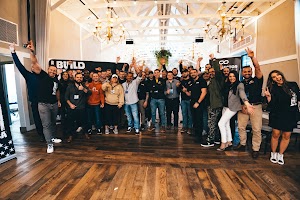
Joseph Hughes and Sydney Vasquez of Contractor Dynamics recorded this conversation earlier this year at the CertainTeed Business Building Workshop, fresh off a stretch of contractor conversations about roofing marketing at RoofCon in Oklahoma City.
What they’re sharing isn’t just theory; it’s a distillation of what they’re hearing from roofing companies across the country every single day. If you’re building a marketing plan for the second half of 2026 and hoping it will actually produce much-needed results, then this is the playbook you need to follow.
AI is a tool, not a replacement for human connection.
The conversation around AI in roofing marketing tends to go one of two directions. Either owners are skeptical and ignoring it entirely, or they’re chasing every new tool without a clear strategy behind it. Neither approach is serving roofing companies well in 2026.
AI and automation are tools for making your back-end processes more efficient, tracking your data more accurately, and freeing up your team’s time so they can focus on what no algorithm can replicate: the human experience of working with your company.
The roofing companies that are winning right now are using AI to handle the operational and analytical work so their people can show up better for customers, and are not using it to remove people from the equation entirely.
As consumer skepticism around AI-generated content continues to rise, the value of genuine human interaction, both online and in person, is going up with it. This is not a reason to ignore AI; the key is to use it strategically while doubling down on the things that build real trust.
Offline roofing marketing is making a comeback.
When COVID pushed everything digital in 2020, a lot of roofing companies quietly let their offline marketing habits atrophy. Community involvement, referral partner relationships, local events, BNI groups, Chamber of Commerce meetings, youth sports sponsorships. These things fell off the priority list as owners chased digital channels and tried to figure out Meta ads and Google LSA.
In 2026, the data from Contractor Dynamics’ client base is telling a clear story. The roofing companies that exceeded their goals last year were not just the ones running the best digital campaigns. They were the ones doing both: executing consistently online while showing up in their communities in person. Referral relationships with realtors, insurance agents, general contractors, and other local businesses are producing results that pure digital strategies struggle to match, particularly in markets where online competition has gotten expensive and crowded.
The reason this is working is rooted in consumer psychology. Skepticism is at an all-time high. People don’t trust what they see online the way they used to, and with the flood of AI-generated content across every platform, that distrust is only deepening. When a homeowner meets someone from your company at a community event, gets a referral from a realtor they already trust, or sees your crew showing up consistently in their neighborhood, that builds a different kind of credibility than any ad can buy. Offline marketing doesn’t replace your digital strategy. It makes everything else work better.
Real faces on video are no longer optional.
Stock images and AI-generated visuals used to be a shortcut that most homeowners didn’t notice. That era is now over. In a marketing landscape saturated with content that looks polished but feels hollow, authentic video of real people doing real work has become one of the most powerful tools available to a roofing company.
The roofing companies making the biggest impact in their local markets right now are the ones putting real faces on video consistently, not once a month but multiple times a week, and distributing that content across every channel available to them. The camera in your pocket is good enough. The content doesn’t need to be produced. It just needs to be real.
One of the most effective strategies that Contractor Dynamics has seen from its top-performing clients is taking organic social content that’s already performing well, and then running it as brand awareness ads on Meta for $20 to $30 a day. For under $1000 a month, that approach puts your video content in front of tens of thousands of people in your local market every single day of the year.
The clients doing this consistently are not only building brand awareness faster, they’re also paying significantly less per result than clients running traditional ad creatives because the algorithm rewards content that people are already engaging with organically.
Getting those reps in, testing multiple videos simultaneously, and letting the data tell you what’s resonating is how the best-performing roofing marketers are operating right now.
If you’re not tracking, you’re guessing with real money.
At RoofCon and the CertainTeed event, one of the most consistent things Joseph and Sydney heard from roofing owners was frustration about their marketing spend. Money going out, but no clear picture of what’s coming back. No way to know which channels are working, which markets are performing, or where to put more budget and where to pull back.
This is one of the most expensive problems in roofing marketing, and also the most solvable. The challenge is that tracking requires someone in your business whose job it is to watch the data consistently. As an owner wearing multiple hats, it’s nearly impossible to monitor your marketing performance closely enough to catch problems early and capitalize on what’s working. By the time most owners look at their numbers, weeks or months have passed, and the opportunity to optimize is long gone.
One of our roofing clients operating across six or seven states recently got a full tracking dashboard implemented across their entire marketing operation. Before that infrastructure was in place, they had no reliable way to evaluate which states deserved more budget, or which channels were actually driving quality leads in each market.
Once the data started flowing, the decisions became obvious. They can see exactly where to increase spend, where to pull back, and which channels to prioritize as they built their 2026 plan. In one case, the data revealed an opportunity to scale a particular channel significantly and almost immediately upon making that change, lead volume increased substantially. That’s what measuring your ROI actually looks like when the tracking is set up correctly.
The reality is that in 2026, only 1 in 100 roofing companies has this all figured out. This is not a discouraging statistic, but a wide open lane for those who are willing to build it.
Speed to lead is now measured in seconds, not minutes.
The five-minute rule used to be the benchmark for lead follow-up. If you responded to an inbound lead within five minutes, research showed you are more than 100x more likely to convert that lead into an appointment compared to waiting longer. That standard already separated the best roofing companies from the rest.
AI is now raising that bar dramatically. Automated follow-up systems are allowing companies to respond to new leads in under fifteen seconds, and that capability is shifting consumer expectations fast. What felt like an impressive response time a year ago is starting to feel slow.
The roofing companies implementing AI-driven lead response tools are not just moving faster than their competition. They’re meeting homeowners at the exact moment of highest intent, before the homeowner has had time to move on to the next option on their list.
This isn’t about chasing technology for its own sake. It’s about consumer behavior. Think about your own experience as a buyer. When you submit a form or send an inquiry, you want a response immediately. If you don’t get one, you keep searching. Your customers are no different. And in a market where 3 to 5 roofing companies are often contacted simultaneously by the same homeowner at the same time, the company that responds first has a structural advantage that no amount of great ad creative can overcome.
Before scaling any marketing channel, make sure your lead response system is dialed in. Spending more on ads while leads sit unanswered is one of the most costly mistakes roofing companies make. Getting this right first is what makes everything else worth paying for.
The roofing companies that win in 2026 will do all of this together.
None of these pieces work as well in isolation as they do together. Authentic video content distributed consistently across organic and paid channels builds the brand awareness that makes your offline presence more recognizable. Your offline presence builds the trust that makes your digital ads more effective. A tracking dashboard gives you the visibility to know what’s working and where to invest more. And a fast, automated lead response system makes sure none of that investment leaks out through slow follow-up.
This is what a Predictable Marketing Machine looks like in 2026. Not a collection of tactics running independently, but a connected system where every piece is working together toward the same goal: becoming the most trusted, most visible roofing company in your local market.
Most roofing companies will read this, nod along, and go back to doing exactly what they were doing before. The ones that act on it are the ones that will look back on 2026 as the year everything clicked. If you want to be in that group, schedule a call with our team and let’s build a plan specific to your market, your goals, and where you are right now. Already know what you need and ready to move to the next step? Our consulting program is where roofing companies stop guessing and start owning their growth.
Recent Articles
View All Articles
The Three-Ad Meta System That Is Producing 6 to 12x Returns for Roofing Companies
What does it look like when a roofing company finally gets its Meta ads right? Dan from Proven Contracting added...
Your Roofing Website Is Either Making You Money Or Losing You Money. There Is No In Between.
Most roofing company owners treat their roofing website design as a one-time project. Build it, launch it, move on. The...
You Don’t Need More Leads. You Need to Work with the Ones You Already Have.
Most roofing companies assume their revenue problem is a lead generation problem. But this assumption is costing them more than...